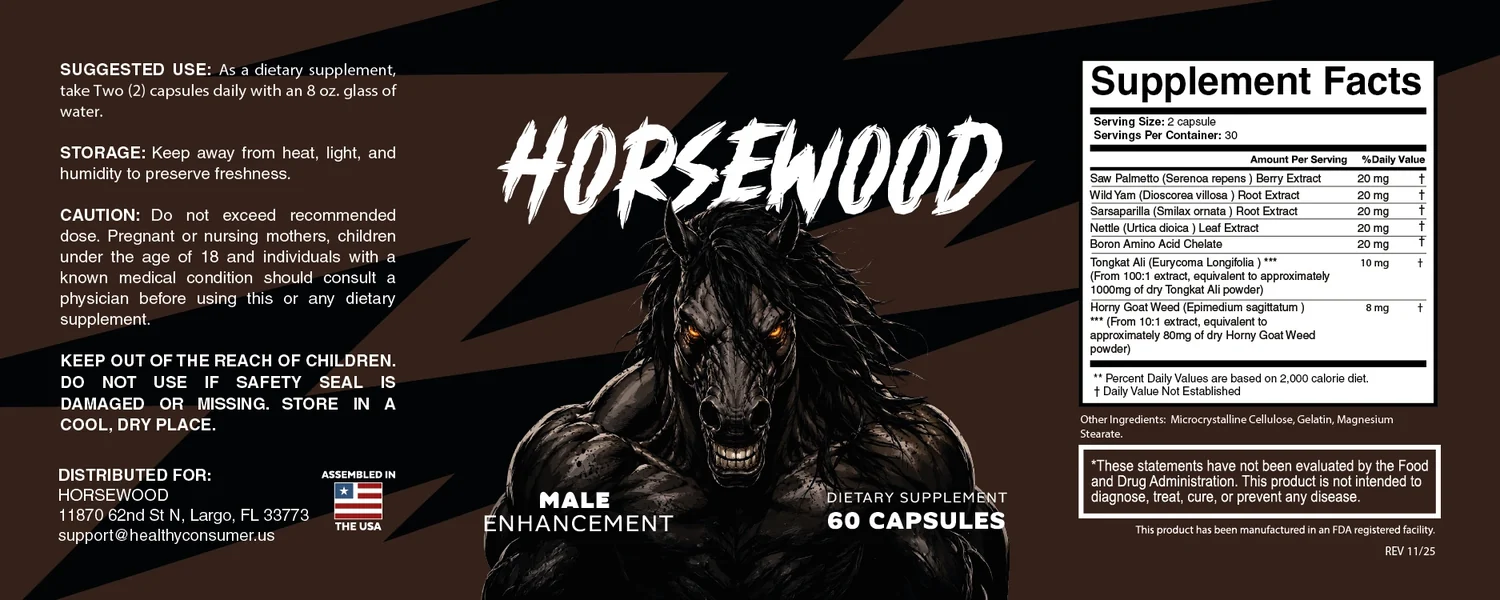
"1,000mg of Tongkat Ali" is one of the most misread claims in men's supplements. Here is what the number actually describes, why the extract ratio is the part that matters, and how to read it on any label.
What Tongkat Ali is
Tongkat Ali (Eurycoma longifolia), also called longjack, is a root used for generations in Southeast Asia and now among the most-studied botanicals in the male-vitality category. In modern supplements it is valued for its association with supporting healthy testosterone that is already within a normal range, along with drive and stamina.
Its traditional reputation is why it anchors so many men's formulas, but reputation is also why it attracts sloppy labeling. Because buyers recognise the name, some brands lean on it heavily while disclosing little about how much is actually present or in what form. Understanding the ingredient therefore means understanding its numbers, which is where most of the confusion — and most of the marketing — lives.
Why the extract ratio changes everything
Here is the crux. When a label says 1,000 mg, it usually does not mean a gram of extract sitting in the capsule. It means a concentrated extract equivalent to that much raw dried root. Horsewood lists it precisely: 10 mg of a 100:1 extract. The 100:1 means a hundred parts of dried root were concentrated into one part of extract, so 10 mg of extract represents about 1,000 mg of root.
This is standard, legitimate practice — but it means two products both claiming "1,000mg" can be wildly different. One might use a 100:1 extract; another might quote raw root with no concentration at all. Without the ratio, the milligram figure alone tells you almost nothing.
How to read any Tongkat Ali label
Three questions cut through the noise: Is there an extract ratio stated, like 100:1 or 200:1? Is the figure the extract weight or the dried-root equivalent? And is it standardised to a marker compound? A label that answers all three is being straight with you. A label that just shouts a number is hoping you won't ask. Our buyer's guide applies the same test to a whole formula.
What the research does and doesn't say
The evidence base for Tongkat Ali is growing but not unlimited. Studies most often explore its role in supporting testosterone already within a normal range, along with aspects of stress, mood and stamina, typically over weeks of consistent use. What the research does not support is any claim that it treats a medical condition, replaces prescribed therapy, or works overnight. It is supportive, botanical, and gradual.
It is also worth separating traditional use from clinical proof. Centuries of traditional use tell us how a botanical has been valued, not that it will produce a specific measurable outcome for you. The modern studies are promising and growing, but they are not the deep, replicated evidence base a prescription drug carries. Holding both facts at once — genuine promise, honest limits — is the mark of reading this ingredient well.
How Horsewood uses it
In Horsewood, the Tongkat Ali extract anchors a stack of seven botanicals, with Horny Goat Weed, Saw Palmetto, Boron, Nettle, Wild Yam and Sarsaparilla around it. The dose is stated openly on both bases so you know exactly what you are getting. If you want to see how quickly that translates into a felt difference, the timeline article is the companion read; for the age-related backdrop, see testosterone decline after 40.
Extract, raw root and standardisation
Three terms get used loosely on labels. Raw root powder is dried, milled root with no concentration — a gram is a gram. An extract concentrates active constituents at a stated ratio, so a small extract weight represents much more root. Standardisation guarantees a minimum level of a marker compound (for Tongkat Ali, often eurycomanone), which adds consistency batch to batch. The most informative labels tell you all three; Horsewood states the ratio and the dried-root equivalent so there is no guesswork.
Common mistakes buyers make
The first mistake is comparing raw milligrams across products without checking the form — a "1,000mg" raw-root capsule and a 100:1 extract equivalent to 1,000 mg are not the same product. The second is assuming more is always better; concentrated extracts are potent, and the labeled dose exists for a reason. The third is ignoring interactions: because Tongkat Ali acts on hormone pathways, it can matter alongside certain medications, which is why the buyer's guide puts "ask your doctor" on the checklist. Treat the number as one data point, not the whole story.
The bottom line on the number
So when you see a bare Tongkat Ali milligram claim, do not take it at face value and do not dismiss it either — ask what form it is. A 100:1 extract equivalent to 1,000 mg of dried root, standardised and stated openly, is a meaningful, honest dose, and it is exactly how Horsewood lists it. A bare number with no ratio is a marketing figure, not a spec. Once you can read the label this way, the rest of the male-vitality aisle gets far easier to judge, and the full buyer's guide applies the same reading to a whole formula.
Before you start any supplement
Speak with your physician first if you take blood pressure medication, blood thinners or anticoagulants, hormone therapy or any hormone-related medication, if you manage a serious medical condition, or if you have any history of a hormone-sensitive cancer. Not for anyone under 18, and not for women. Nothing here is medical advice. These statements have not been evaluated by the Food and Drug Administration, and this product is not intended to diagnose, treat, cure or prevent any disease.