Most of this category is noise: hidden blends, big numbers with no context, and promises no supplement can keep. Here is a practical checklist for reading past the marketing to what a label is actually telling you.
Red flag one: the proprietary blend
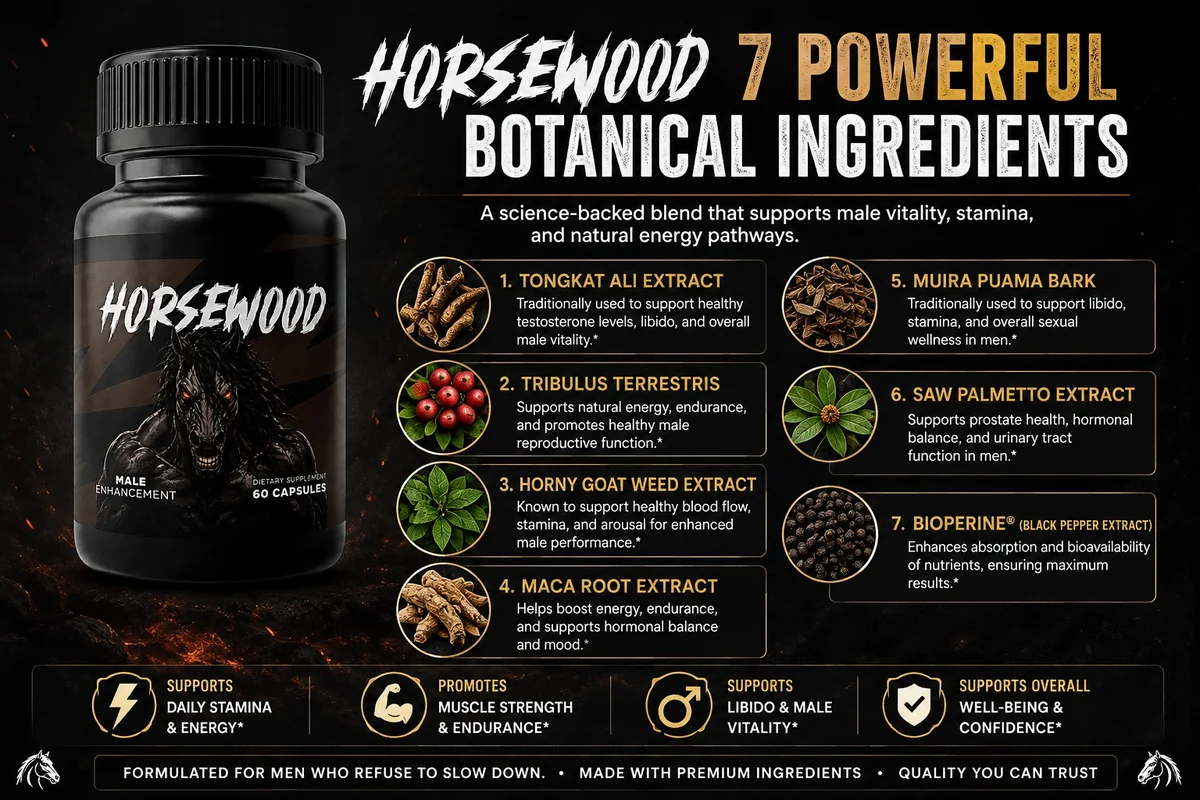
The single biggest trick in supplements is the "proprietary blend" — a list of ingredients under one combined weight, so you never learn how much of each you're getting. It lets a brand put a famous botanical on the label in a dose too small to matter. Prefer formulas that state each ingredient's amount individually. Horsewood, for reference, names all seven.
Red flag two: numbers without context
A big milligram figure means nothing without its form. As covered in our Tongkat Ali explainer, "1,000mg" of an extract can mean very different things depending on the ratio. Look for extract ratios (like 100:1), whether the figure is extract or dried-equivalent, and whether it's standardised to a marker compound.
Check where and how it's made
Look for manufacturing in an FDA-registered, cGMP-certified facility and some form of third-party testing for purity and potency. These don't guarantee an effect, but they tell you the product is made to a documented standard and independently checked — a baseline any serious brand should meet.
These signals are about trust in the process, not proof of a result. A cGMP facility means the product is made under documented, inspectable quality controls; third-party testing means an outside lab has checked that what is on the label is what is in the bottle. Neither promises the formula will work for you, but together they rule out a whole category of bad actors — the ones cutting corners on purity, potency or basic honesty about contents.
Judge the claims
Honest supplement marketing uses structure-and-function language: it supports, helps maintain, promotes. Dishonest marketing promises to cure, treat or deliver overnight transformation. If a product guarantees a dramatic fix, that is your cue to walk. A trustworthy brand will also tell you plainly that results are gradual and vary — the way the timeline guide does.
Language is a surprisingly reliable filter. Regulators draw a hard line between supporting normal function and treating disease, and trustworthy brands stay firmly on the supportive side of it because they have to. When you see a supplement claiming to cure, reverse, or dramatically transform, it is either breaking the rules or bending the truth — and either way it has told you something important about how much to trust the rest of its label.
Weigh the guarantee and the buying channel
A real money-back guarantee — ideally one that accepts empty bottles — shifts the risk onto the company, which is where it belongs. And buy from the official source: third-party marketplaces are where counterfeits live, and guarantees usually don't apply to them.
The questions to bring to your doctor
Before starting anything, ask your physician: Is this safe with my current medications? Does it interact with any condition I have? Is there any reason I specifically should avoid these botanicals? That conversation matters most if you take blood pressure, blood-thinning or hormone-related medicines. For the wider age context, see testosterone decline after 40, and for one worked example of a fully-disclosed formula, the Horsewood review.
Building a shortlist
Once you have filtered for disclosed dosing, sensible extract ratios, cGMP manufacturing and third-party testing, you will usually be left with a short shortlist — which is the point. From there, weigh the practical factors: is it one capsule or a fistful, is there a stimulant you don't want, is the guarantee real, and is the buying channel official? A formula that is honest on paper but miserable to actually take every day will still end up in the back of a drawer.
Marketing tactics to walk away from
A few tactics are reliable exit signals. Countdown timers that reset when you reload. "Doctor" endorsements with no name or credential you can check. Before-and-after claims that sound medical. Fake scarcity, invented "sold out" banners, and reviews that all read in the same voice. None of these tell you anything about the formula — they tell you how the brand thinks about you. Pair a clean label with straight talk about gradual, varying results, the way the timeline guide and the honest review aim to, and you are on safer ground.
Your one-minute checklist
Before buying any male-vitality supplement, run it through six quick questions. Are all ingredient amounts listed individually, not hidden in a blend? Are extract ratios and standardisation stated? Is it made in an FDA-registered, cGMP-certified facility with third-party testing? Does the marketing use honest structure-and-function language rather than cure-promises? Is there a real, empty-bottle-friendly guarantee? And are you buying from the official source? A product that clears all six — as a fully-disclosed formula like Horsewood aims to — has earned a trial; one that fails two or more belongs back on the shelf. For the age context behind the whole category, the testosterone-after-40 guide fills in the why.
Before you start any supplement
Speak with your physician first if you take blood pressure medication, blood thinners or anticoagulants, hormone therapy or any hormone-related medication, if you manage a serious medical condition, or if you have any history of a hormone-sensitive cancer. Not for anyone under 18, and not for women. Nothing here is medical advice. These statements have not been evaluated by the Food and Drug Administration, and this product is not intended to diagnose, treat, cure or prevent any disease.